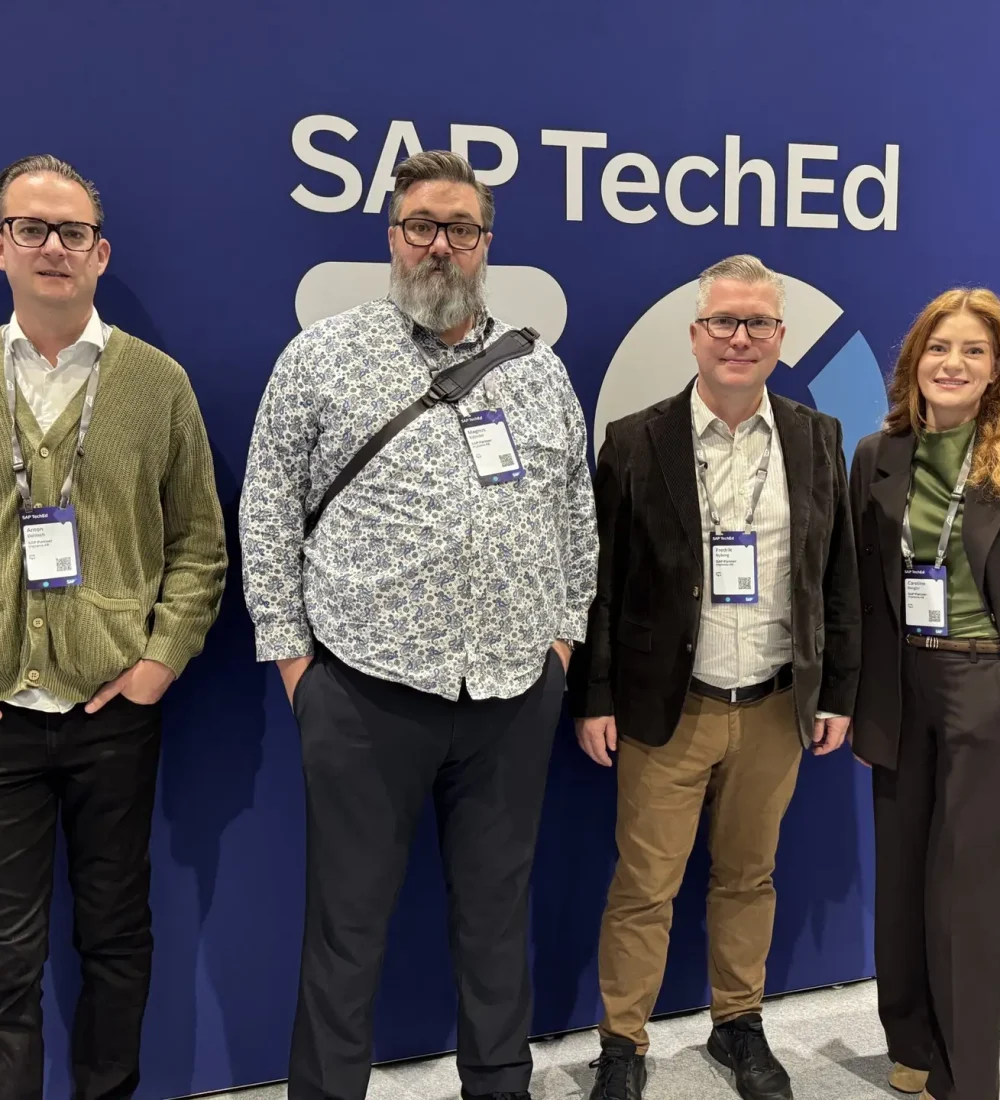

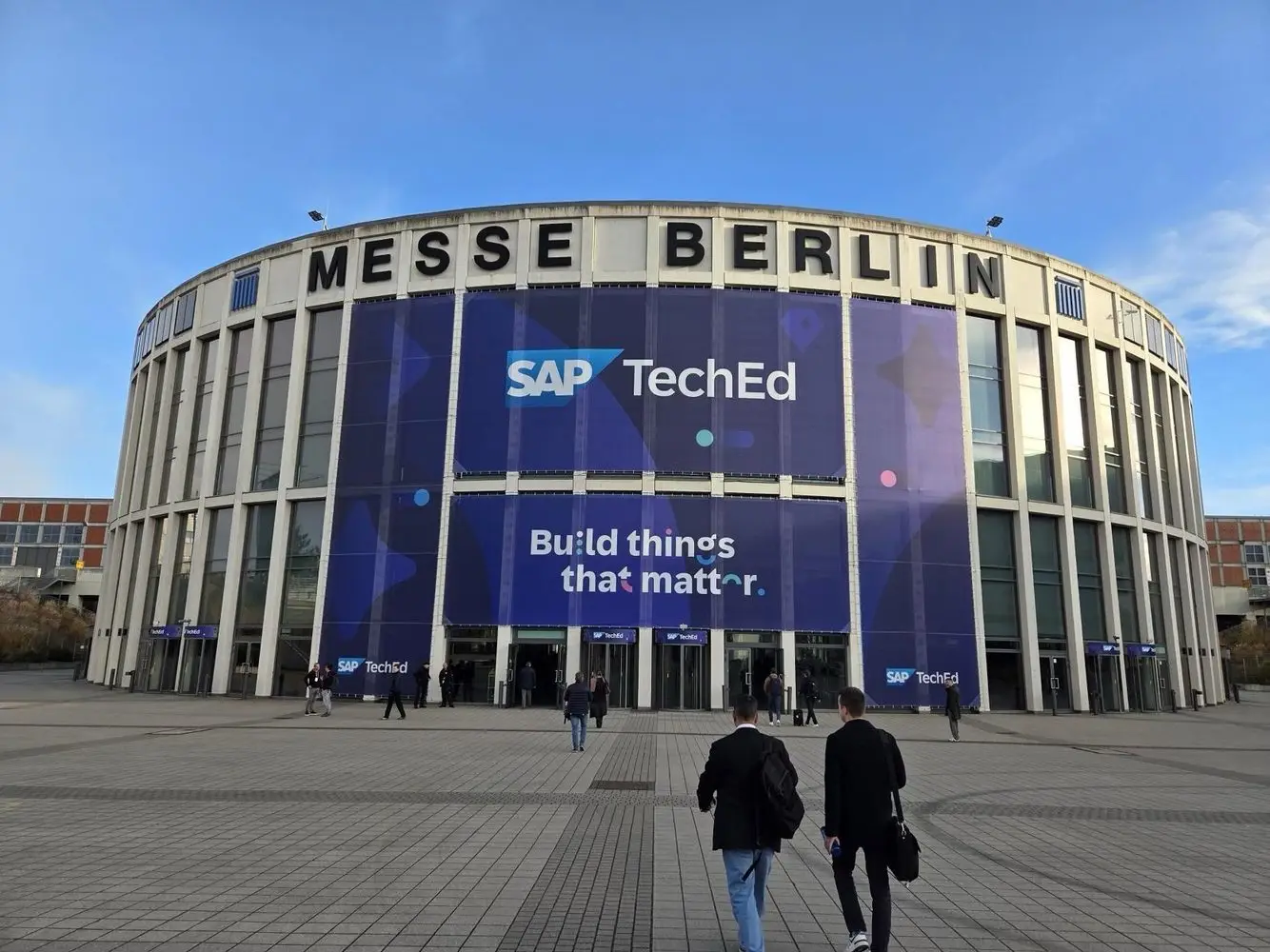
The Autonomous Enterprise Becomes a Reality. This was the main theme of this year’s SAP TechEd. The vision is not new, but with the latest product news, it is becoming increasingly clear how AI can evolve from assisting users to independently performing tasks within business processes.
Another recurring message was Build things that matter – focusing on solutions that create real business value rather than technology for technology’s sake.
“AI in SAP is no longer something that is just ahead of us. The technology is here and now, and SAP’s investments clearly show where development is headed. But the real benefit only arises when AI is connected to customers’ processes, data, and ways of working. That’s where we as partners can make a difference,” says Caroline Berglin at Implema.
Here are five news items and trends that particularly captured our experts’ interest – and their perspectives on what they mean in practice
1. Joule Work and Joule Studio – AI moves from assistance to action
One of the conference’s major announcements was the further development of Joule Work and Joule Studio.
With Joule Work, users will be able to describe what needs to be done and then let AI agents perform the work across multiple systems and processes.
New functionalities enable agents to plan and execute complex multi-step workflows, as well as collaborate with agents from other vendors through open protocols like Agent2Agent (A2A) and Model Context Protocol (MCP).
Joule Studio is the tool for developing and customizing AI agents. It combines the ability to get started quickly with low-code with more advanced development in pro-code.
A real strength is precisely the combination of simplicity and technical depth. Low-code lowers the threshold for developing solutions close to the business, while pro-code is needed to build more advanced, integrated, and long-term sustainable solutions.
The true value of agentic AI lies not in the number of agents, but in which business processes they can improve and what results they create. At the same time, the simplicity of quickly creating new solutions needs to be combined with the technical expertise required to make them function long-term.
2. SAP Business AI Platform – the cloud becomes the foundation for next-generation AI
It is evident that SAP’s AI development is closely linked to its cloud strategy. With SAP Business AI Platform, SAP consolidates functions for developing, integrating, and governing AI in both SAP systems and other applications. This initiative shows how AI is becoming an increasingly integrated part of SAP’s cloud landscape, rather than a separate function on top of existing systems.
For businesses, this opens new opportunities to use AI in their business processes, which in turn increases the importance of a modern, well-structured system architecture, standardized processes, and a clean system core, Clean Core, as these become crucial prerequisites for leveraging these opportunities.
3. Databricks and Knowledge Graph – AI gains a better understanding of the business
SAP also presented an expanded collaboration with Databricks and new functionalities in SAP Business Data Cloud, designed to make it easier to combine and use data from different systems.
With SAP Business Data Cloud Ontology Manager and SAP Knowledge Graph, the ability to place data in its business context is strengthened by describing how information, business concepts, and processes are interconnected.
For AI, merely having access to data is not enough. It must also be understood in the right context. For example, an AI agent not only needs to identify a delay in the supply chain but also understand which customers, production plans, and financial consequences are affected. It is this understanding that makes information useful for better decisions and more advanced automation.
4. MCP and A2A – AI agents to collaborate across system boundaries
Another important development is the ability for AI agents to collaborate across system boundaries.
SAP’s investments in open protocols, such as MCP and A2A, will enable AI agents to communicate with each other, utilize functions in different systems, and interact in complex business flows.
For businesses, this opens opportunities to automate entire business flows, even when they span multiple systems and business areas. For example, AI agents can coordinate tasks that previously required manual efforts in different systems.
At the same time, demands for integrations, security, and control over what tasks agents are allowed to perform increase.
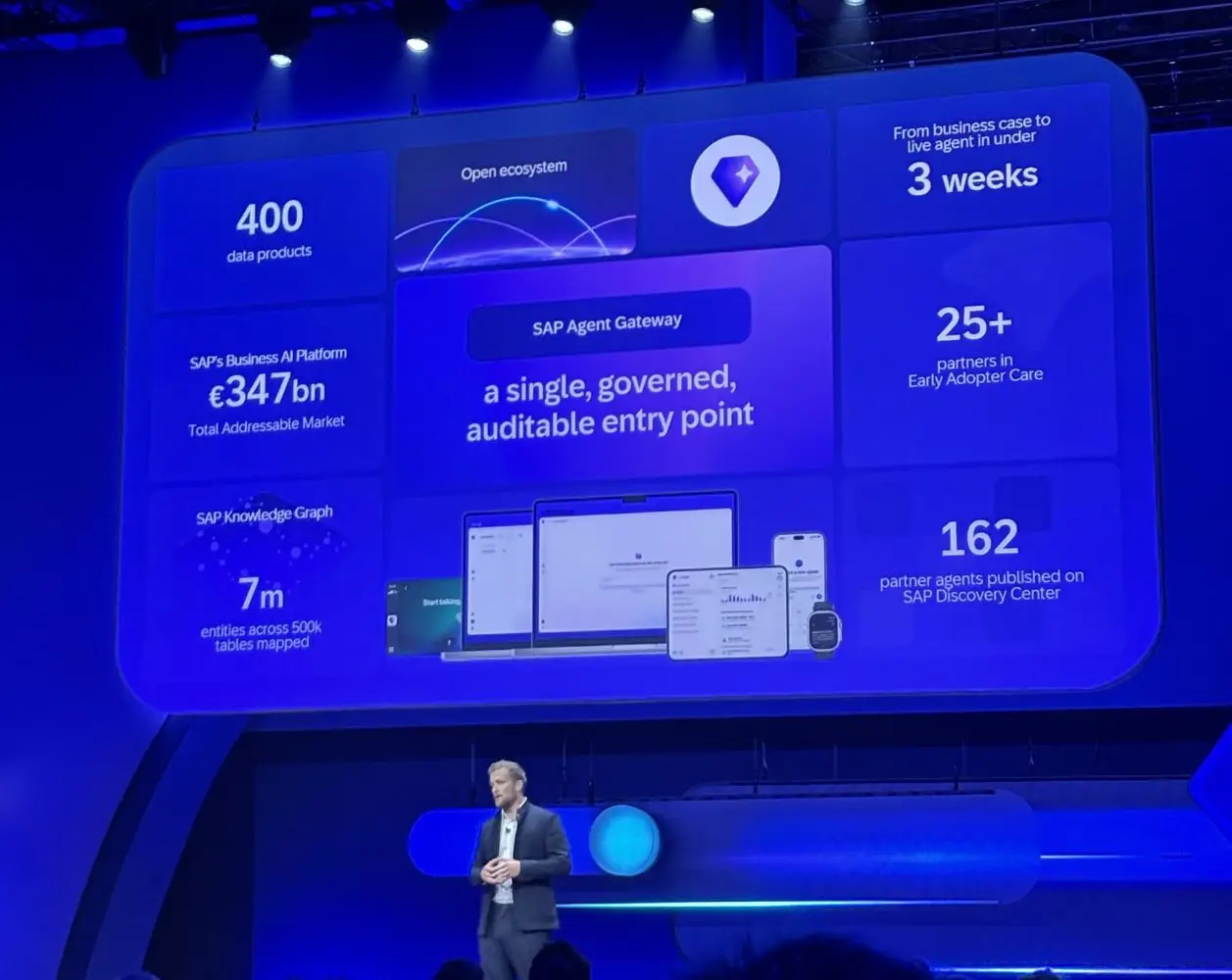
5. Enterprise AI Gateway – security and governance take a central role
Security, monitoring, and control were recurring themes during the conference. As AI agents no longer just provide recommendations but can also initiate and execute actions in business-critical processes, these issues become increasingly important.
SAP presented new functions for monitoring and administration in Joule Studio, among others. These are intended to give developers and administrators better insight into agent behavior, model usage, and costs.
With SAP Enterprise AI Gateway, a central solution for managing AI traffic, permissions, policies, monitoring, and traceability was also introduced.
SAP also presented an AI Governance Assistant designed to help companies manage compliance requirements, including those related to the EU AI Act.
A clear lesson from Berlin is also that security and governance must be included from the start. When AI gains greater autonomy, control, traceability, and operational reliability become crucial for scaling up its use.
From Technical Possibilities to Business Value
Overall, the news from SAP TechEd shows how the vision of The Autonomous Enterprise is becoming increasingly concrete. AI agents are gaining greater capabilities to perform work, while SAP strengthens the platform, data management, and governance required to use the technology in business-critical processes.
For companies to benefit from these developments, three crucial prerequisites remain:
- A stable cloud platform and well-conceived architecture that provides room to develop and integrate AI solutions.
- Reliable business data and the right context that enables AI to act based on the business’s actual conditions.
- Security, governance, and monitoring that make it possible to use AI in a controlled manner.
This is also where the conference’s message, Build things that matter, connects technology and business value: The crucial factor is not how many AI agents a company implements, but what problems they solve, what processes they improve, and what results they create.