


AI agents have the potential to eventually play a significant role in business processes and are part of the development Microsoft describes through Frontier Transformation. But the path there is far from given. The technology is still new, and for many organizations, the next step is as much about understanding where agent technology adds value as it is about starting to use it.
– There’s a lot of talk about agents right now, but we’re still at an early stage. We need to test and learn, but also understand in which situations agent technology actually adds something.
It’s when the agent leaves the controlled demo environment that many of the interesting questions arise. In a demo, you can limit the task, choose the information, and control the conditions. In a real process, there are exceptions, dependencies, and situations that don’t follow the intended normal case.
In a demo, you test whether the agent can handle the task. Once it’s in production, you also need to know how it behaves when the process doesn’t go as planned.
When is an AI agent the right solution?
The first question isn’t really how the agent should be built, but whether an agent is the right way to solve the need at all.
Some tasks can be handled better and more cheaply with existing functionality, an automated flow, or an integration. Agent technology becomes especially interesting when the ability to interpret information, handle variation, or act based on context creates a value that’s hard to achieve in any other way.
– We need to understand what the agent actually adds. That could mean solving a task more efficiently than today, or doing things that have previously been difficult to automate.
But Michel believes that at the same time, you need to look beyond the individual task. An agent can make one step more efficient without the process as a whole becoming better.
– It’s easy to look at what the agent can do in isolation. But what’s interesting is what happens to the entire flow. If we save time in one step but create more review work or new problems in the next, we may not have gained much.
The agent also encounters the exceptions
Once an agent is a relevant solution, the next question is how well the organization around it functions.
– An agent depends on the environment it’s released into. If you have poor data quality, unclear processes, or overly broad permissions, those problems don’t disappear just because you add AI. In many cases, they actually become more apparent.
But the challenge isn’t just about data quality. Real business processes rarely consist solely of clear normal cases. Customers do unexpected things, information is missing, orders deviate, and people make judgment calls that aren’t always documented in a process flow.
Take, for example, an agent designed to help handle exceptions in an order flow. As long as the information is complete and everything follows the expected process, the task can be relatively simple. But what happens when a delivery is delayed, the data in the systems doesn’t match up, or an action risks affecting the customer? Should the agent suggest a solution, take action itself, or hand it over to an employee?
That’s why the question isn’t just what the agent should do, but also what should happen when it can’t or shouldn’t do it.
– We need to think through where in the process the agent comes in, which situations it should be able to handle, and what happens when it encounters something that deviates. That’s often where the difference between a demo and a solution that works in the business becomes clear.
But the work doesn’t end once the agent is in production. It also needs to be possible to track how it acts, detect deviations, and understand why it makes certain decisions. Because an AI agent can handle similar situations in different ways, the same kind of follow-up used for a traditional, rule-based automated flow isn’t always enough.
In that sense, the first agent also becomes a test of the organization around it.
How much autonomy can the task handle?
One of the most important differences between different use cases is the scope of action the agent is given.
Letting an agent read information and suggest the next step is one thing. Letting it change data, initiate activities, or communicate externally is something else. The greater the potential consequences of an action, the greater the demands placed on the governance around the agent.
– You need to think in layers. What is the agent allowed to read? What is it allowed to change? What is it allowed to communicate externally? And when does a human need to approve something before it happens?
At the same time, this doesn’t mean human control at every step is the obvious solution. If every decision has to be reviewed manually, much of the benefit of the agent risks disappearing. And control that happens routinely isn’t necessarily good control.
– The challenge is finding the right control points. The human needs to be there where their judgment actually adds something, not necessarily at every step.
Governance, then, isn’t just about limiting the agent. It’s also about how much autonomy a given task can handle and what mandate the organization is actually prepared to give the agent.
The impact is what matters
In the end, the question is relatively simple: the agent needs to either solve a task more efficiently than today or enable something that was previously difficult or impossible. Otherwise, it becomes hard to justify the additional complexity, governance, and maintenance the technology brings with it.
But the impact also needs to be assessed at the right level. An agent saving time in a single step isn’t necessarily the same as the process as a whole having become better.
That’s why Michel believes the discussion about AI agents needs to shift from what the technology can do to what the organization actually wants to achieve with it.
– We’re going to learn a lot over the next few years. But the measure of success isn’t how many agents we manage to roll out, but whether they actually make the processes better and create value that justifies using them.
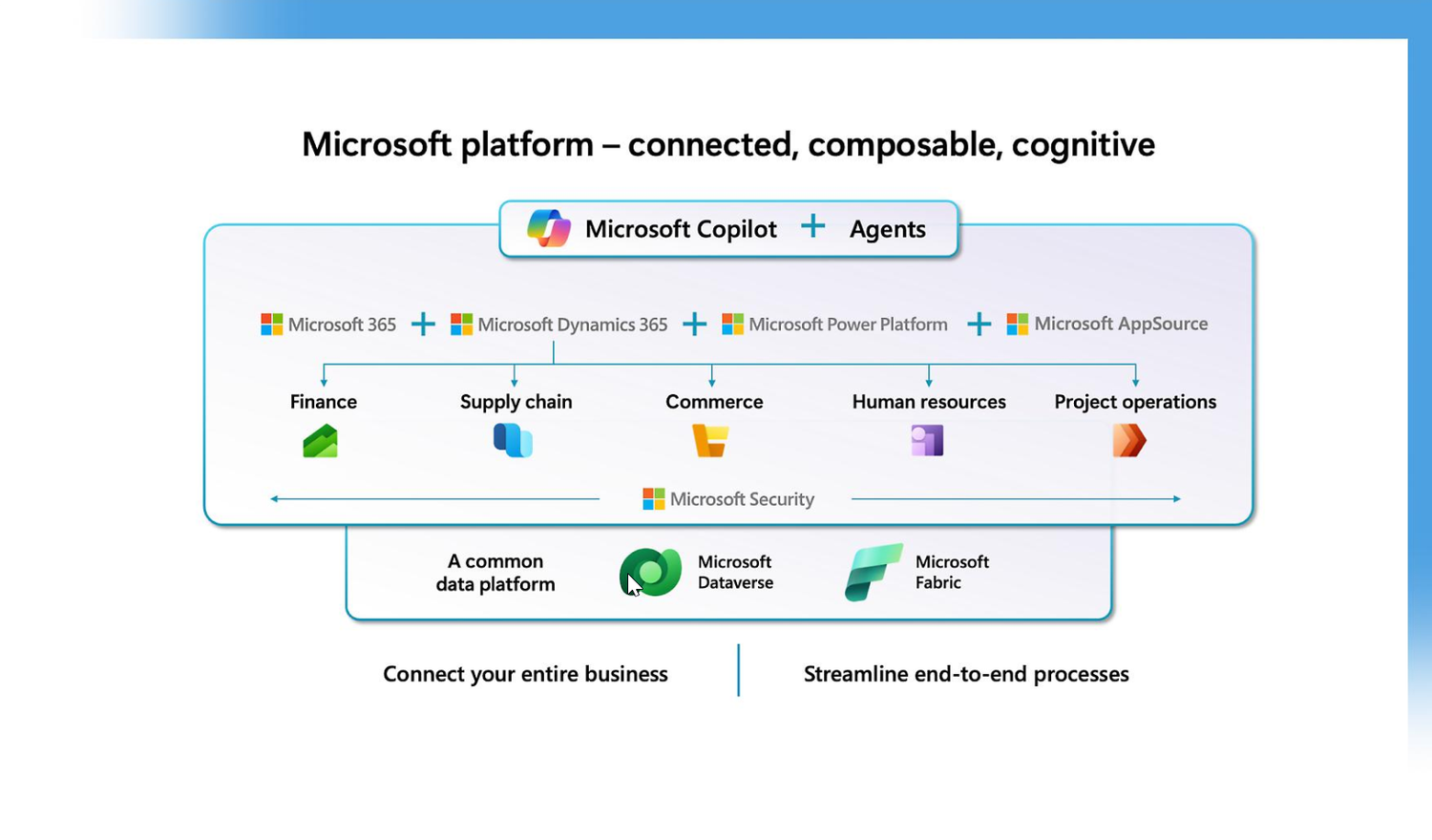
From AI support to more independent agents. Microsoft’s development within Dynamics 365 Finance and Supply Chain Management illustrates how AI can take on a larger role in business processes, while also raising questions about data, permissions, and control. Illustration: Microsoft.
On October 20, Michel Hedenstjerna and Tonny Kvant from Implema will take part in DUG Stockholm Community Days. During the session “AI Agents in D365: Data, Processes, and Governance Behind Real Impact”, they’ll share experiences from real implementations and show examples of AI agent solutions at customer sites. The focus is on what it takes to go from a working demo to a solution that creates value in the business.