
Microsoft Fabric – for modern data analysis and smarter decisions. In an era where data is one of the most valuable assets for companies and organizations, Microsoft is now investing heavily in Microsoft Fabric. The platform has been called everything from a “game changer” to “a data analysis smorgasbord.” We spoke with Göran Flink Joles, Expert Consultant Analytics at Implema, to hear more about the platform.

Hello there, Göran Flink Joles, what is Microsoft Fabric?
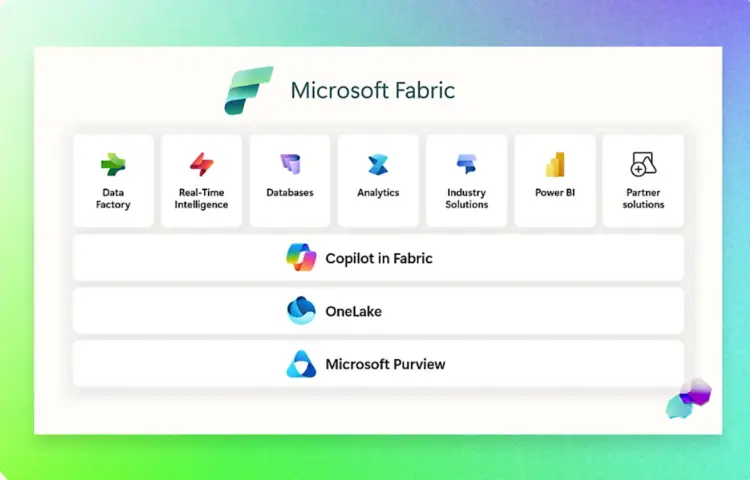
The short version is that it is an AI-driven, all-in-one platform for data management and analysis that brings together several of Microsoft’s most powerful services under one roof. Microsoft Fabric is part of Azure and includes tools such as Power BI, Data Factory, Data Warehouse, and Real-Time Intelligence.
Fabric combines data management, analysis, and AI to help companies transform their data into smart decisions. This eliminates the need to manage multiple separate services and instead allows you to work more efficiently and strategically with your data. It is simply designed to make data integration and analysis smoother.
What are the major strengths of Fabric?
Here, I would especially like to highlight the following points:
- Integration of data: Fabric enables seamless integration of data from various sources, which simplifies data flows and improves access to information.
- Real-time analysis: The ability to analyze data in real time gives companies faster information and thus helps the business become more flexible and easily adaptable, or agile if you will.
- Visualization and insights: The platform includes advanced visualization tools that make it possible to create interactive dashboards and identify trends in business and the world around us, among other things.
- Scalability: Fabric can grow with the business’s needs and can handle large amounts of data efficiently.
- Security: With the Purview component, you can work with governance and protect sensitive information while analyzing data usage.
With OneLake as a common storage point, both structured and unstructured data can be managed in one place, making it easier to share and analyze information across the company.
In addition, license management has become smoother because Fabric is sold per capacity level. This allows companies to adapt their performance and costs as needed.
How does Microsoft Fabric connect with Dynamics 365?
Microsoft Fabric can be used to collect, analyze, and make data from Dynamics 365 accessible together with data from other business systems and applications. This makes it possible to create a unified view of the business, improve reporting, and give AI solutions access to more relevant business context. For many organizations, the combination of Dynamics 365 and Fabric becomes an important foundation for data-driven decisions and future AI initiatives.
What is included in Microsoft Fabric?
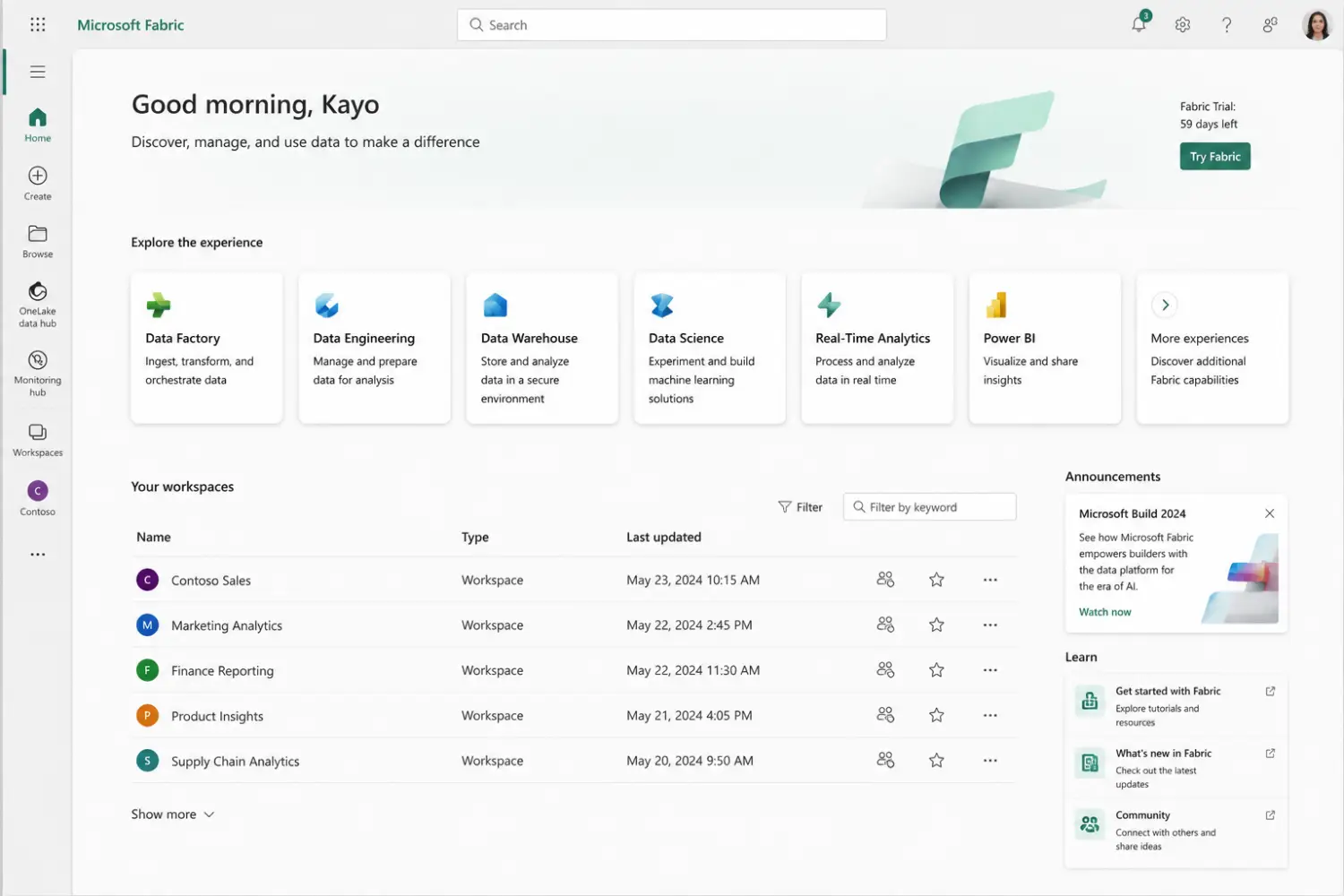
Microsoft Fabric brings together several previously separate data and analytics services into a unified platform. Among the components are Power BI for analysis and visualization, Data Factory for data integration, Data Warehouse for data storage, Real-Time Intelligence for managing real-time data, Data Science for AI and machine learning projects, and OneLake, which serves as the platform’s shared data lake.
What does Microsoft Fabric cost?
Microsoft Fabric uses a capacity-based pricing model where companies pay for the compute capacity used. Capacity can be scaled up or down depending on needs, from smaller environments to large enterprise solutions. The required investment depends on factors such as data volumes, number of users, performance requirements, and which features will be used. In recent years, Microsoft has also progressively made more AI features, including Copilot, available within the Fabric platform.
What Role Does AI Play in Microsoft Fabric?
AI is an important part of Microsoft Fabric. There, Copilot, Microsoft’s AI-powered assistant, makes it possible to automate and simplify many tasks. For example, users can:
- Generate reports and analyze data in Power BI by asking questions in plain language.
- Create and manage pipelines in Data Factory without writing code.
- Generate and understand SQL queries in Data Warehouse and SQL databases using AI.
- Get code suggestions and automation in Data Science and Data Engineering.
Initially, Microsoft offered Copilot from capacity level F64 and up, but since the end of April 2025, Copilot and AI features are available on all paid capacities from F2 and up.
What’s Next for Microsoft Fabric?
Microsoft continues to invest heavily in Fabric and positions the platform as the hub for data, analytics, and AI in the Microsoft ecosystem. The pace of development remains high, with new features in areas including AI, real-time analytics, data sharing, and integration with external platforms.
A clear trend is that Microsoft is making it easier for companies to work with data where it already exists. Support for open formats, shortcuts, and integrations with platforms such as Snowflake, Databricks, and other data sources reduces the need for extensive data migrations.
At the same time, we see that Fabric is becoming an increasingly important foundation for companies that want to leverage generative AI. For AI to create business value, it requires access to relevant, quality-assured, and business-contextualized data – and that’s where Fabric plays a central role.
Interest continues to grow. Fabric has quickly established itself as one of Microsoft’s fastest-growing platforms in the data space and is today a natural part of many organizations’ work with data, analytics, and AI.
How Can Implema Help Companies Implement Fabric?
At Implema, we have already helped several clients implement Microsoft Fabric. Our first client went live in May 2024, and we have since completed approximately 15 Fabric implementations where Fabric is used together with Dynamics 365 F&O as the source system. Med det är vi ledande i Sverige.
Our strength is that we combine ERP and Analytics expertise, which means that we can offer a complete solution to our customers. We want to make data a simple and powerful tool that strengthens their competitiveness.
Finally, What are your Best Tips for Getting Started with Fabric?
Actually, it does not differ from a regular analytics project, even if the platform is new.
- Identify your needs and set a clear strategy.
- Start small – test Fabric in a pilot project before scaling up.
- Identify your data sources – which are the easiest to start with?
- Make sure to educate users, the IT department, and management to get support throughout the organization.
- Get help from an experienced partner for a smooth implementation.
Want to know more? Reach out to us at Implema! We’ll help you take the step into the data platform of the future!
Frequently Asked Questions About Microsoft Fabric
What is Microsoft Fabric?
Microsoft Fabric is an integrated platform for data management, analysis, reporting, and AI. The platform brings together features that previously existed in separate tools and makes it possible to work with the entire data chain in a unified environment. The goal is to simplify how organizations collect, analyze, and use data to make better decisions.
What is the difference between Microsoft Fabric and Power BI?
Power BI is Microsoft’s tool for analyzing and visualizing data. Microsoft Fabric is a broader platform that also includes data integration, data engineering, data warehousing, real-time analytics, and AI. Power BI is included as a central component in Fabric, but Fabric offers significantly more features for managing and refining data.
How does Microsoft Fabric connect with AI and Copilot?
AI depends on access to relevant, accurate, and well-structured data. Microsoft Fabric helps companies collect, organize, and make data from different sources accessible, which creates a foundation for Copilot, AI agents, and other AI services. The better the data foundation, the greater the opportunity to create business value with AI.
What is required to use Copilot in Microsoft Fabric?
To get maximum value from Copilot requires more than technology. The organization needs access to relevant data, good data quality, clear data models, and thoughtful governance of permissions and information management. Many companies discover that the work with data and governance is at least as important as the AI solution itself.
When should a company invest in Microsoft Fabric?
Microsoft Fabric is particularly interesting for organizations that have data spread across multiple systems, experience challenges with reporting, or want to create better conditions for AI and data-driven decisions. The platform can help simplify data management, reduce complexity, and create a common foundation for analysis and innovation.
What does Microsoft Fabric cost?
Microsoft Fabric uses a capacity-based pricing model where the cost depends on the organization’s needs, data volumes, and usage. Therefore, there is no general price that fits all companies. To assess the scope of the investment, you typically need to start from the business requirements for performance, analysis, and future
This article was published in March 2025 and has been updated in June 2026 with current information about features, licensing, and Copilot, among other things.